

Warehouse for Rent in Sharjah: Costs, Areas & Permits Guide
Finding the right warehouse for rent in Sharjah is about much more than the asking rent. The right unit has to fit your licence, your stock, your trucks and your power needs, and the total cost of running it has to make sense for your budget.
Sharjah has a mix of mainland industrial districts and free zones. Sharjah Industrial Area, Al Sajaa, Emirates Industrial City, SAIF Zone and Hamriyah Free Zone each suit different kinds of businesses, from small online sellers to large manufacturers.
This guide walks you through the main warehouse areas, recent asking rents, hidden costs, permits, tenancy rules and what to check on a site visit, so you can shortlist properties with confidence.
Quick answer: Start by comparing Sharjah Industrial Area, Al Sajaa, Emirates Industrial City, SAIF Zone and Hamriyah Free Zone. The best choice depends on your licensed activity, how much space you need, your delivery routes, the power supply you require and your budget.
Why Do Businesses Choose Sharjah for Warehouse Rental?
Sharjah sits between Dubai and the Northern Emirates, which makes it a practical base for companies that move goods across several markets. Trading firms, manufacturers, wholesalers and e-commerce sellers all use it for storage, production and distribution.
Established industrial infrastructure
Sharjah has one of the oldest industrial sectors in the UAE, with dedicated districts, logistics services and government support. The Sharjah Economic Development Department (SEDD) publishes the Sharjah Industrial Guide, which explains how the sector works and which authorities handle what.
Warehouses of every size
You will find small storage units, mid-sized commercial warehouses and large industrial buildings. Compare them on floor area, clear height, loading access and power supply, not on size alone. A smaller unit with a smart layout can often hold more stock than a bigger one full of columns and awkward corners.
Road links to other emirates
Sharjah’s road network connects its industrial districts with Dubai, Ajman and the rest of the UAE. Still, every district is different, so map your real delivery routes and test the travel times at peak hours before you commit.
Mainland and free-zone options
You can rent on the mainland or inside a free zone. Mainland premises usually suit companies trading directly in the UAE market, while free-zone warehouses suit eligible import, re-export, manufacturing and logistics activities. Your licence structure decides which one fits.
Best Areas to Rent a Warehouse in Sharjah
Location shapes your daily operating costs more than almost anything else. Here is how the five main options compare.
1. Sharjah Industrial Area
Sharjah Industrial Area is the emirate’s best-known industrial district. It is split into numbered zones (Industrial Areas 1 to 18), and buildings vary a lot in size, age and access.
It is a common choice for general merchandise storage, wholesale stock, spare parts, workshops and dispatch operations. When comparing zones, look at the distance to main roads, truck access, loading space and the type of businesses around you.
Best for: wholesalers, distributors and trading companies that want an established location.
2. Al Sajaa Industrial Area
Al Sajaa is popular with companies that need larger warehouses and industrial plots. It suits bulk storage, distribution and heavier industrial use.
Before choosing Al Sajaa, check the usable floor area, access roads for heavy vehicles, power supply, loading facilities, building condition, permitted activities and the distance to your suppliers and customers.
Best for: businesses that need more space or industrial facilities.
3. Emirates Industrial City
Emirates Industrial City is worth a look if you plan to manufacture, store or distribute goods at scale. Make sure the building supports your actual activity. A company running heavy machinery needs very different power, ventilation and flooring from one storing boxed consumer goods.
Best for: manufacturers and industrial operators.
4. Sharjah Airport International Free Zone (SAIF Zone)
SAIF Zone sits right next to Sharjah International Airport and offers warehouses, offices and land for eligible trading, manufacturing and logistics companies. After its latest expansion in the U2 logistics district, which added 56 warehouses covering about 340,000 sq ft, the free zone has around 2,500 warehouses in total. It is a strong option if you import goods, manage inventory for re-export, assemble products or trade internationally.
Compare the licence package, warehouse specifications, permitted activities, customs procedures and fees. If you plan to sell to mainland UAE customers, find out exactly how that works under your free-zone licence.
Best for: international traders, logistics operators and manufacturers using a free-zone structure.
5. Hamriyah Free Zone
Hamriyah Free Zone, set up in 1995 on Sharjah’s northern coast, is built for heavier industry. It has its own 14-metre-deep port and 7-metre inner harbour, hosts more than 6,500 companies, and is a major base for oil and gas firms and steel fabricators. Pre-built warehouses come with loading bays, and customs is on site. Key points to compare include transport links, industrial facilities, loading arrangements, customs procedures, licensing, and environmental and safety rules.
Best for: eligible industrial, manufacturing, trading and logistics businesses.
Which location suits your business?
A distributor serving Dubai will care most about road links. A manufacturer will care more about power capacity, building specs and approved industrial use.
| Location | Main strength | Typical use |
|---|---|---|
| Sharjah Industrial Area | Established, central districts | General storage and distribution |
| Al Sajaa | Larger plots and industrial space | Bulk storage and industrial operations |
| Emirates Industrial City | Industrial infrastructure | Manufacturing and distribution |
| SAIF Zone | Free-zone environment near the airport | Trading, re-export and logistics |
| Hamriyah Free Zone | Industrial and trading facilities | Manufacturing and industrial operations |
These categories are a general guide, not a promise of permitted use or availability. Always confirm the licensing rules and the actual facilities with the relevant authority and the property representative before you sign.
How Much Does It Cost to Rent a Warehouse in Sharjah?
Rents depend on location, size, building condition, facilities and your type of activity. Two warehouses of the same size can have very different asking rents because of ceiling height, loading access, power supply, office space or general condition.
Recent advertised rents
The examples below come from public warehouse listings reviewed when this guide was updated in November 2026. They show how much size and specification move the price. The two Al Sajaa units differ by about AED 25 per sq ft; the pricier one offers 10 m clear height and 100 kW of power, against 7 kW for the cheaper unit. Very large units, like the 40,000 sq ft warehouse in Industrial Area 18, usually work out cheaper per square foot.
| Location | Size (sq ft) | Asking rent (AED/year) | AED per sq ft/year | Key features |
|---|---|---|---|---|
| Industrial Area 18 | 40,000 | 880,000 | 22.0 | Storage use only |
| Al Sajaa | 3,750 | 120,000 | 32.0 | Mezzanine, 7 kW, fire-fighting system |
| Industrial Area 11 | 7,500 | 250,000 | 33.3 | Office rooms included |
| Sharjah Industrial Area | 3,200 | 120,000 | 37.5 | Recently upgraded unit |
| Emirates Industrial City | 4,000 | 150,000 | 37.5 | Ground floor + mezzanine, office |
| Al Sajaa | 8,000 | 459,000 | 57.4 | 10 m height, mezzanine, 100 kW |
Price disclaimer: These are advertised asking rents from public property listings reviewed in November 2026 (some were first listed earlier in the year), sorted by rate per square foot. They are not official market averages or confirmed availability. Units may already be let or repriced, and the final rent depends on specification, lease terms and negotiation. Always confirm current terms with the listing agent.
What affects warehouse rent?
- Location: accessibility, nearby infrastructure and demand all push rents up or down.
- Floor area: bigger units cost more in total, but the rate per square foot can be lower.
- Ceiling height: more clear height means more room for racking and better use of space.
- Power supply: units with higher electrical capacity suit machinery and production, and often cost more.
- Loading access: loading bays, wide doors and space for trucks to turn make daily operations easier.
- Condition: well-maintained or recently refurbished buildings usually ask for more than older units.
- Office space: a built-in office, pantry or staff area can add to the rent but save you fit-out costs.
How to compare rents fairly
Work out the rent per square foot so you are comparing like with like:
Annual rent per sq ft = annual rent ÷ total floor area
Then look at usable space. Offices, columns, staircases and other fixed structures eat into storage area. Ask the agent how the area was measured before you compare two units.
What Other Costs Should You Budget For?
The advertised rent is only part of what you will pay. Build a full occupancy budget before you sign. Typical extra costs include:
- Refundable security deposit
- Real estate agency commission
- Lease attestation or registration fees
- Electricity and water deposits
- Monthly utility bills
- Warehouse permit and business licence fees
- Fire-safety upgrades and inspections
- Environmental approvals, where required
- Insurance
- Racking and shelving
- Equipment maintenance
- Pest control and waste collection
Who pays for each item depends on the property, the regulations, your activity and the lease itself, so get it in writing.
Setup costs vs. running costs
Split your budget into two parts. Setup costs cover moving, racking, inspections, approvals and fit-out. Running costs cover rent, utilities, maintenance and insurance.
A cheap unit that needs heavy work can end up costing more than a pricier one that is ready to use. Run the numbers for the first year and for the full lease term.
What Size Warehouse Do You Need?
The right size depends on how much stock you hold, how you store it, how many people work inside, how often trucks arrive and how fast you expect to grow. Sketch a simple space plan before you call any agents.
Small warehouses
Small units suit online sellers, spare-parts traders, small distributors and anyone with limited stock. Check that there is enough room for shelving, packing, staff movement and deliveries. Do not pick a unit just because it is cheap; it still has to work day to day.
Medium-sized warehouses
Mid-sized units suit wholesalers and regional distributors. You will likely need separate zones for receiving, storage, picking, packing and dispatch. A good layout cuts down on wasted movement and makes stock easier to manage.
Large industrial warehouses
Large buildings suit manufacturing, heavy equipment, high stock volumes or big distribution hubs. Pay close attention to structure, clear height, power, fire protection, loading bays, truck circulation, ventilation and environmental rules. Assess the building against the actual equipment and materials you will use.
Types of Warehouses Available in Sharjah
General storage warehouse
Used to hold products, stock and equipment. It suits wholesalers, importers, retailers and distributors. Check that the property allows your specific goods.
Industrial warehouse
Built for approved manufacturing, assembly and production-related storage. Expect stricter requirements for power, ventilation, fire protection and environmental approval.
Logistics and distribution warehouse
Designed to move goods quickly between suppliers and customers. Truck access, loading areas, racking systems and an efficient dispatch flow matter most here.
Temperature-controlled warehouse
For goods that need specific conditions, such as certain foods, pharmaceuticals and cosmetics. Check cooling capacity, temperature monitoring, backup power and the relevant health and safety approvals.
Warehouse with office space
Some units come with a built-in office or mezzanine, which is handy if you run admin and stock from one place. Make sure the office or mezzanine is approved for that use.
Key Features to Inspect Before You Rent
Ceiling height
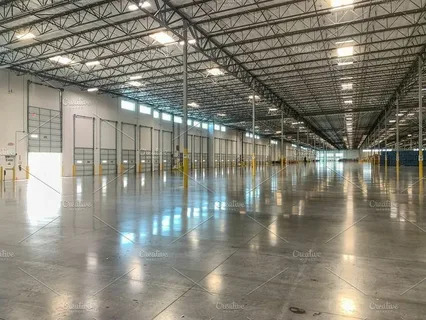
Measure the clear internal height, especially if you plan to use pallet racking or forklifts. Sharjah listings commonly advertise heights of around 8 to 13 metres, but don’t take the advertised figure at face value. Beams, lights and sprinkler pipes can cut the usable clearance.
Loading and unloading
Check the size and position of the doors and whether your trucks can reach the unit and load safely. Look at gate width, loading bays, turning space, parking and any heavy-vehicle restrictions in the area.
Electricity supply
Power matters if you run machinery, cold rooms or production lines, and it varies a lot. Warehouses advertised in Al Sajaa alone range from 7 kW to 100 kW. Ask for the exact connected load and meter setup, and whether the Sharjah Electricity, Water and Gas Authority (SEWA) would approve an upgrade.
Fire safety
Check the fire alarms, extinguishers, sprinklers and emergency exits. Requirements depend on the building and your activity, so confirm them with the Sharjah Civil Defence Authority. It is also worth reading Sharjah’s Safety in Warehousing guideline (OSHJ-GL-02), which applies to every business in the emirate that runs a warehouse or storage area.
Floor and structure
The floor must handle your racking and equipment loads. Look for cracks, uneven patches, water damage and drainage problems. Get an engineer’s opinion before installing heavy machinery or high racking.
Ventilation and environment
Manufacturing, chemical storage and food operations may need extra ventilation or environmental controls. Confirm the building is suitable before you sign.
Mainland or Free-Zone Warehouse: Which Is Right for You?
The two options differ in licensing, customs, regulation and tenancy rules.
| Factor | Mainland warehouse | Free-zone warehouse |
|---|---|---|
| Licensing authority | SEDD and other mainland authorities | The free-zone authority (e.g. SAIF Zone, Hamriyah) |
| Location | Mainland industrial districts | Inside the free zone |
| Permitted activities | As listed on your mainland licence | As listed on your free-zone licence |
| Selling to UAE customers | Direct, within your licence | Subject to mainland access and customs rules |
| Tenancy rules | Sharjah Law No. 5 of 2024 | The free zone’s own rules |
When a mainland warehouse makes sense
Choose the mainland if you hold a mainland licence and need premises for your approved UAE activities. Confirm how the warehouse permit links to your trade licence and permitted activity.
When a free-zone warehouse makes sense
Choose a free zone if you hold a free-zone licence and focus on international trade, re-export, assembly or approved logistics. Keep in mind that free-zone status does not remove customs, VAT, corporate tax or mainland trading obligations. Get advice on your actual supply chain and tax position first.
What Licences and Permits Do You Need?
The permits you need depend on your location, activity, company structure, and whether you are on the mainland or in a free zone. For mainland licensing and warehouse permits, the main authority is the Sharjah Economic Development Department (SEDD). Its Sharjah Industrial Guide sets out the warehouse permit process.
Typical warehouse permit documents
Depending on your case, you may need:
- A valid company trade licence
- A valid technical evaluation report
- The warehouse permit application
- A copy of the main company’s licence
- Parent-company documents (for some companies licensed outside Sharjah)
- Partners’ ID documents, where required
- An attested lease agreement, where applicable
- Approvals from other authorities, depending on your activity
Other government approvals
Some activities need sign-off from more than one authority:
- Sharjah Municipality: municipal services, environmental rules and lease attestation
- Sharjah Civil Defence Authority: fire and life safety
- Sharjah Electricity, Water and Gas Authority (SEWA): utility connections and power capacity
- Other authorities: depending on the goods stored, the manufacturing process and environmental impact
Identify every approval you need before you sign the lease or install equipment. One useful detail: for warehouses inside Sharjah, the warehouse permit renews automatically with your trade licence, because SEDD links the two electronically. Along the way, expect to be referred to SEWA to pay the electricity deposit and lease attestation fees.
Free-zone permits
SAIF Zone and Hamriyah Free Zone run their own licensing and facility rules. Get the requirements directly from the free-zone authority. A mainland warehouse permit does not carry over to a free-zone property.
Sharjah Warehouse Tenancy Rules
Sharjah Law No. 5 of 2024 on property leasing, issued in September 2024, covers residential, commercial, industrial and professional tenancies in the emirate. Properties in some Sharjah free zones are exempt where their own committees or judicial bodies handle rental disputes.
Written lease agreements
Your lease should clearly state the property, permitted use, rent, payment terms, duration and each party’s responsibilities. The law provides for written or electronic leases on approved forms.
For covered tenancies, the landlord must attest the lease with Sharjah Municipality or an authorised body within the legal deadline. Keep a copy of the attested lease; you will need it for licensing.
Rent increase rules
Under the law, the landlord cannot raise the agreed rent during the first three years of the tenancy unless both sides agree. If you accept an increase within those three years, the landlord cannot raise the rent again for another two years.
After that, any increase must follow the fair-rent rules in the law’s executive regulations. Always check how these rules apply to your specific lease.
Protection for commercial and industrial tenants
The landlord cannot ask a commercial or industrial tenant to vacate during the first five years, except on grounds set out in the law. These include not paying rent within 15 days of the due date, serious breach of contract, unauthorised use and unlawful subletting.
This is not an unconditional right to stay. You still have to meet your lease terms and legal obligations.
Rental disputes
Sharjah’s Rental Disputes Center was set up under Law No. 6 of 2024 and is part of Sharjah Municipality. It handles mainland rental disputes. Free-zone tenants should check the dispute process that applies to their zone.
How to Find the Right Warehouse in Sharjah: 7 Steps
- Define your activity. Decide whether you need the space for storage, manufacturing, distribution or packing, and check the licensing rules first.
- Work out the space you need. Estimate stock volume, equipment, racking layout, loading area and staff facilities. Do not go by total floor area alone.
- Shortlist locations. Compare Sharjah Industrial Area, Al Sajaa, Emirates Industrial City and the free zones against your delivery routes, suppliers and customers.
- Compare lease terms. Look at rent, number of cheques, deposit and maintenance duties. Make sure the total cost fits your budget. A licensed agent can help you negotiate; you can find real estate agents on Ziba Property.
- Visit in person. Inspect the building, power, access, loading and safety systems. Take photos and note any defects.
- Confirm permits. Ask the landlord or agent for the property documents, then confirm approvals with SEDD, Sharjah Municipality, the free-zone authority or other bodies as needed.
- Review the lease. Check permitted use, duration, renewal, maintenance, fit-out permissions and termination terms. For complex leases, have a lawyer review it.
Warehouse Inspection Checklist
Take this list with you on every site visit.
Building condition
- Roof and walls in good condition
- Floor free of cracks and damage
- Doors, locks and gates working
- Adequate lighting and ventilation
- Usable floor area measured
- Clear internal height confirmed
Operations
- Truck access checked
- Loading and unloading area inspected
- Electrical capacity confirmed
- Water supply and drainage checked
- Parking and vehicle circulation reviewed
- Racking and shelving options assessed
Safety and approvals
- Emergency exits inspected
- Fire-safety systems checked
- Building approvals confirmed
- Activity-specific permits reviewed
- Environmental requirements checked, where relevant
Lease and documents
- Landlord’s authority to lease confirmed
- Lease agreement reviewed
- Permitted activity matches your licence
- Deposit and payment terms clear
- Maintenance responsibilities agreed
- Renewal and termination clauses reviewed
- Lease attestation documents obtained
6 Common Mistakes to Avoid
1. Going for the cheapest unit
Low rent does not mean low running costs. Weak power, poor access or constant repairs can wipe out any savings.
2. Ignoring permitted use
A unit approved for general storage may not be approved for manufacturing or food storage. Check the permitted use before you sign anything.
3. Overlooking truck access
Tight streets and narrow gates slow down deliveries and raise handling costs. Drive the route your trucks will take.
4. Not checking the power supply
If you run machinery or cold rooms, confirm the electrical capacity first. Waiting for an upgrade can delay your opening by weeks.
5. Skimming the lease
Read the clauses on maintenance, subletting, fit-out and renewal carefully. Never rely on verbal promises; get everything in writing.
6. Forgetting about growth
If you expect your stock to grow, make sure the unit can grow with you, or that the lease lets you move without heavy penalties.
Frequently Asked Questions
What is the average warehouse rent in Sharjah?
There is no single figure that fits every warehouse. In the listings we reviewed in November 2026, asking rents ranged from about AED 22 per sq ft per year for a very large storage unit to about AED 57 for a high-spec unit with 10 m height and 100 kW power. Most mid-sized units sat between AED 32 and AED 38. Always compare similar units and ask for current quotes.
Price disclaimer: These figures are advertised asking rents from public listings in November 2026, not official market averages or confirmed offers. Rents change often, so confirm current terms with the listing agent.
Which area is best for renting a warehouse in Sharjah?
Sharjah Industrial Area suits general storage and distribution. Al Sajaa and Emirates Industrial City suit larger industrial needs. SAIF Zone and Hamriyah Free Zone suit eligible free-zone businesses.
Can I rent a small warehouse in Sharjah?
Yes. Small units work well for e-commerce sellers, spare-parts traders and small wholesalers. Availability changes quickly, so check current listings and confirm the permitted use.
Can foreign-owned companies rent warehouses in Sharjah?
Usually, yes, subject to your company structure, licence and property rules. The approvals you need depend on your activity and location.
Is warehouse rent paid monthly or yearly?
Most listings quote an annual rent, often paid in several post-dated cheques. The actual schedule is agreed between you and the landlord, so confirm it in writing along with the deposit.
Is renting a warehouse in Sharjah cheaper than in Dubai?
Often, but not always. It depends on the district and the property. Factor in transport costs, delivery routes, utilities and licence fees, not just the rent.
Can an e-commerce business run from a Sharjah warehouse?
Yes, if your licence and the premises cover storage, packing and dispatch.
Are cold-storage warehouses available in Sharjah?
Yes, in some industrial areas and free zones. Check cooling capacity, temperature monitoring, backup power and approvals before you sign.
Do I need a special permit to rent a warehouse?
You may need a warehouse permit and other approvals, depending on your licence and activity. SEDD’s industrial guide covers the mainland process. Free-zone businesses should contact their free-zone authority.
Can I install racking or a mezzanine?
Usually, with the landlord’s written consent, an engineering assessment and approval from the relevant authorities. Confirm the structure can take the load first.
Can I use a Sharjah warehouse for manufacturing?
Only if the property, your licence, the infrastructure and the required approvals all support it. Extra industrial, electrical, fire-safety or environmental rules may apply.
What should I check before paying a deposit?
Confirm the property details, the landlord or authorised agent, lease terms, permitted use, refund conditions and required approvals. Get everything in writing and keep your receipts.
Final Thoughts
The right warehouse in Sharjah balances location, cost, building specs and regulatory fit. Sharjah Industrial Area, Al Sajaa, Emirates Industrial City, SAIF Zone and Hamriyah Free Zone each serve different needs.
Before you decide, compare usable floor area, loading access, power capacity, building condition, permitted activities and the full cost of occupancy. A bit of planning now saves money, avoids delays and gives your business a base it can grow from.
Looking for a warehouse for rent in Sharjah?
Explore warehouses on Ziba Property and compare locations, sizes and facilities side by side. Filter by area, size and budget to build your shortlist, then take the inspection checklist above to every viewing.
Browse Warehouses for Rent in Sharjah
For more guides on renting and buying property in the UAE, visit the Ziba Property blog.
Regulatory and information disclaimer
This article is general information only and is not legal, financial or licensing advice.
For mainland warehouse permits and business licensing, contact the Sharjah Economic Development Department (SEDD). For municipal and tenancy matters, contact Sharjah Municipality and the Sharjah Rental Disputes Center. You may also need approvals from Sharjah Civil Defence, SEWA, environmental authorities or other bodies, depending on your activity.
Real estate brokerage and property advertising in Sharjah are regulated by the Sharjah Real Estate Registration Department (SRERD). RERA (the Real Estate Regulatory Agency) regulates real estate in Dubai, not Sharjah, and does not issue Sharjah warehouse permits. Free-zone properties may follow separate rules and dispute processes.
Rental examples are advertised asking prices and may change. Always confirm availability, specifications, permissions and lease terms directly with the property representative and the relevant authorities before signing.

About the author
Muhammad Amir is part of the Ziba Property editorial team. He writes practical guides on residential and commercial property across the UAE, with a focus on warehouse and industrial leasing, location comparisons and tenancy rules, to help businesses and property seekers make informed decisions.

