

Top 10 Best Places to Invest in Malaysian Real Estate 2026
Malaysia Property Market Overview for 2026
Malaysia’s residential market entered 2026 in a stabilizing phase rather than a boom phase, and that distinction shapes almost every decision an investor needs to make this year. Bank Negara Malaysia raised the Overnight Policy Rate (OPR) to 3.00%, up from the pandemic-era low of 1.75%. Each 0.25% increase in the OPR adds roughly RM60–80 to the monthly repayment on a RM400,000 mortgage, meaning highly leveraged purchases are harder to justify on cash flow alone than they were three or four years ago. (Price and rate figures cited throughout this article are indicative estimates as of September 2026 and are subject to change — confirm current figures with a licensed Malaysian real estate agent before transacting.)
At the same time, national gross rental yield sits at around 5.3%, and Malaysia’s economy is projected to grow roughly 4–4.5% in 2026, supported by government spending, private investment, and expanding trade and services activity under the MADANI economic framework.
Three macro-drivers explain where investment capital is being concentrated in 2026:
- Cross-border demand from Singapore, concentrated almost entirely in Johor Bahru and accelerated by the Johor Bahru–Singapore Rapid Transit System (RTS) Link and the Johor–Singapore Special Economic Zone announced in January 2026.
- Transit-connected suburbs across the Klang Valley, where landed homes in mature areas remain structurally undersupplied even as certain high-rise segments — particularly serviced apartments — sit in clear oversupply.
- Industrial and technology-sector demand in Penang, anchored by semiconductor and electronics manufacturing expansion around Bayan Lepas.
For a broader look at the areas worth shortlisting, see our guide to five key areas to consider when buying property in Malaysia, and browse current listings that match your budget across these markets.
How to Choose a Location: Matching Your Strategy to the Market
Three broad investor profiles map onto different parts of this list:
- Maximum cash flow (net positive from month one): favor lower entry prices and higher-yield locations such as Cheras, Setapak, and Ipoh.
- Balanced growth and income: favor moderate entry prices, moderate yields, and infrastructure-driven upside — Johor Bahru’s Bukit Indah and Tebrau, and Kuala Lumpur’s Bukit Jalil, tend to sit here.
- Premium tenant quality and low vacancy favor higher entry prices, lower yields, and employment-anchored micro-locations such as Bangsar South and central Petaling Jaya.
A fourth category, Kota Kinabalu and Langkawi, sits outside this framework, since returns there depend on tourism occupancy rather than long-term tenancy.

Top 10 Places to Invest in Malaysian Real Estate in 2026
1. Johor Bahru (Iskandar Puteri, Bukit Indah, Tebrau, Mount Austin)
Johor Bahru offers the strongest combination of catalysts of any Malaysian market: the RTS Link, the Johor–Singapore Special Economic Zone, and steady expatriate and commuter demand from Singapore. Gross rental yields in Johor Bahru run around 5.3%. Entry prices remain well below Klang Valley equivalents for comparable unit sizes (indicative figures — confirm current pricing with a licensed agent). Tebrau and Mount Austin are frequently cited as lower-barrier entry points, while Bukit Indah and Iskandar Puteri offer more established, liquid resale markets.
Watch point: Johor also holds one of the largest unsold serviced-apartment inventories in the country — roughly 9,000 units per NAPIC data, concentrated in the RM500k–RM1m band.
2. Klang Valley — Petaling Jaya and Subang Jaya
Central PJ condo yields have compressed to roughly 3.5–4.5% gross as prices have outpaced rents. These locations suit investors prioritizing liquidity, low vacancy, and long-term capital preservation over headline yield.
3. Cheras, Kuala Lumpur
Cheras is one of Kuala Lumpur’s highest-yielding pockets, with gross yields estimated at 5.5%–9.5% and a broad, resilient tenant base of commuters, students, and working professionals.

4. Setapak and Sentul, Kuala Lumpur
Median condo prices of around RM380,000–RM430,000 (indicative, subject to change) keep the initial capital outlay manageable, with gross yields estimated around 4.7%–7.5%. For a closer look at pricing and unit types in this corridor, see our review of Prima Setapak’s pricing and amenities. Investors comparing entry-level KL suburbs may also want to look at Taman Desa Jaya, another established, moderately priced neighborhood in the same price band.
5. Bangsar South, Kuala Lumpur
Bangsar South illustrates rent resilience anchored by employment. Gross yields here run roughly 5.8%–6.8% against median prices of around RM500,000–RM520,000 (indicative figures).
6. Bukit Jalil, Kuala Lumpur
Bukit Jalil combines large-scale retail and transit infrastructure with growing residential density, offering upside from both capital growth and rental demand. Investors comparing specific towers elsewhere in the city should also see our profile of Naza Tower KL, which breaks down location, pricing, floor plans, and the developer’s track record in more detail.
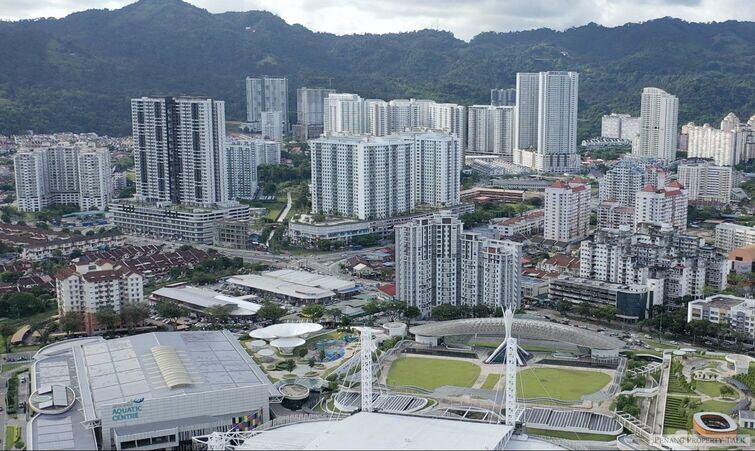
7. Penang (Bayan Lepas and George Town)
Penang’s investment case rests on its industrial base and expanding semiconductor manufacturing sector. Bayan Lepas stands out for growth upside, while George Town’s gross yield runs lower, at around 3.7%, reflecting its premium as a heritage and lifestyle location.
8. Cyberjaya
Cyberjaya offers some of the highest headline gross yields in the Klang Valley due to lower entry prices, but the area has been flagged repeatedly as historically oversupplied, with capital appreciation lagging rental performance.
9. Ipoh
Ipoh is positioned as one of the lowest-barrier-to-entry markets among Malaysia’s top investment locations, offering geographic diversification without Klang Valley or Penang-level capital requirements.
10. Kota Kinabalu and Langkawi
These markets represent Malaysia’s tourism- and lifestyle-driven investment segment. Properties with sea views or beach access command a clear premium, and returns depend on tourism cycles and management quality rather than on local employment fundamentals.
Rental Yield Snapshot by Location (Gross, Early–Mid 2026)
| Location | Gross Rental Yield (approx.) | Investment Profile |
| Johor Bahru | ~5.3% | High growth, cross-border demand, some segment oversupply |
| Cheras (KL) | ~5.5%–9.5% | High yield, strong tenant base |
| Setapak / Sentul (KL) | ~4.7%–7.5% | Lower entry price, broad tenant demand |
| Bangsar South (KL) | ~5.8%–6.8% | Employment-anchored, resilient rents |
| Kuala Lumpur (overall) | ~4.9% | Stable, lower yield in prime addresses |
| Petaling Jaya (central) | ~3.5%–4.5% | Liquidity and long-term capital preservation |
| George Town, Penang | ~3.7% | Lifestyle premium, tech-sector demand |
| National average | ~5.3% | Baseline benchmark before costs and tax |
All figures above are gross, listing-based estimates, not audited transaction data, and are indicative only as of September 2026. Net yield after vacancy, maintenance, strata fees, and tax is materially lower in every market. Confirm current figures with a licensed Malaysian real estate agent before deciding to buy.
Financing, Costs, and Legal Framework for 2026
Malaysian property investment typically requires a 10% down payment plus 8–10% in transaction fees before you collect a single ringgit of rent (indicative figures; confirm with your financing bank). For foreign investors, Malaysia maintains a comparatively transparent legal framework: non-residents can acquire property subject to a state-set minimum purchase threshold, typically ranging from RM500,000 to RM2,000,000 depending on the state and property type. Rental income for non-residents is taxed at a flat 30% on net income after allowable deductions.
A structural risk worth flagging across almost every location on this list is the “serviced apartment on commercial title” trap — a unit that looks residential but sits on commercial-titled land, which can carry different financing terms and resale dynamics than a purely residential title. For a full walkthrough of the purchase process, from reservation fee to loan approval and completion, see our step-by-step guide to buying property in Malaysia.
Frequently Asked Questions
Is 2026 a good time to buy property in Malaysia?
A broad, nationwide price surge looks unlikely in 2026, but selected micro-locations with rail access, employment anchors, and limited landed supply — such as parts of Johor Bahru, Petaling Jaya, Subang Jaya, Cheras near MRT lines, and Bayan Lepas — could outperform, with plausible price growth in the 3%–6% range over the next 12 months.
Which Malaysian city has the best rental yield in 2026?
Johor Bahru and several Kuala Lumpur suburbs, such as Cheras, post the highest gross yields nationally, generally above 5%, though net yield after vacancy, maintenance, and tax is meaningfully lower.
Can foreigners buy property in Malaysia?
Yes. Malaysia permits foreign property ownership under a relatively transparent legal framework, subject to a state-set minimum purchase price that typically ranges from RM500,000 to RM2,000,000, and non-resident rental income is taxed at a flat 30% on net income. Because requirements vary by state and by agent, it’s worth learning how to find a reliable property agent in Malaysia before signing anything.
What is the biggest risk in Malaysian property investment in 2026?
Segment-specific oversupply — particularly serviced apartments on commercial titles in parts of Johor and Kuala Lumpur — combined with higher financing costs from the current 3.00% OPR.
Should I buy a new launch or a subsale property in Malaysia?
Subsale properties generally let investors verify actual rental income before buying and start earning from month one. New launches tend to make sense only in narrow scenarios: genuine under-market pricing from a developer clearing stock, a strategic location with no subsale alternative, or a first-time-buyer stamp duty exemption.
Methodology and Sources
This article synthesizes publicly available 2026 market commentary and data from Malaysian property research desks, including NAPIC (National Property Information Center) figures on unsold stock, Global Property Guide yield benchmarks, and Bank Negara Malaysia’s published OPR data
Disclaimer
This content is for general informational purposes only and does not constitute financial, legal, or investment advice. Property values, rental yields, interest rates, and government policy can change. Conduct real estate transactions in Malaysia through a licensed Malaysian real estate agent (registered with the Board of Valuers, Appraisers, Estate Agents and Property Managers, Malaysia); consult one along with a financial advisor and a tax professional before committing capital.
Ready to Explore Johor Bahru, Kuala Lumpur, or Penang?
If any of the locations above fit your investment strategy, browse Ziba Property’s current Malaysia listings across Johor Bahru, Kuala Lumpur, and Penang, or get matched with a licensed local agent who can walk you through pricing, yield data, and financing options for your shortlist.
Browse Ziba Property Malaysia listings

About the Author
Muhammad Amir is a Kuala Lumpur-based property research writer for Ziba Property, covering the Klang Valley, Johor Bahru, and Penang residential markets. He has spent 2 years reporting on Malaysian housing policy, rental yield trends, and foreign investment rules, and works with licensed Malaysian real estate agents to fact-check pricing and regulatory details before publication.

