

Office & Retail Space in Malaysia: CRE Insights 2026
Malaysia’s commercial property sector has entered a more disciplined, data-driven phase in 2026. After several years of oversupply, pandemic-era vacancy, and hesitant leasing, the market is no longer defined by blanket recovery or blanket decline. Instead, selectivity defines it. Grade A office towers with green certification are filling up while aging stock struggles; malls anchored by experience and tourism are thriving while tired neighborhood centers fight for footfall. Understanding this bifurcation, building by building and city by city, is now the core skill for anyone buying, leasing, or investing in Malaysian commercial space.
This guide explains why the sector matters this year, what the current data shows, how office and retail assets are performing, and the practical strategies, hotspots, and risk controls investors need heading into the rest of 2026.
Why Malaysia Commercial Real Estate Matters in 2026?
Commercial real estate is one of the clearest barometers of Malaysia’s broader economic health. Office absorption tracks corporate expansion and foreign direct investment; retail performance tracks consumer confidence and tourism recovery. In 2026, both signals are pointing in a cautiously positive direction, but not uniformly.
Three forces are reshaping demand this year. First, hybrid work has permanently changed how much space companies need and where they want it — proximity to transit and lifestyle amenities now outweighs sheer floor size. Second, environmental, social, and governance (ESG) expectations have moved from a nice-to-have to a leasing prerequisite, particularly for multinational tenants with sustainability mandates. Third, the government’s Visit Malaysia Year 2026 (VMY2026) campaign is channeling tourist spending back into malls and mixed-use precincts, giving retail landlords a genuine tailwind after years of subdued consumer sentiment.
For investors, this matters because Malaysia’s commercial real estate market is not standing still: industry estimates place the sector’s value climbing from roughly USD 9.6 billion in 2025 toward USD 10.3 billion in 2026, with continued expansion projected through the end of the decade. Growth of this scale rewards those who understand where the quality is concentrating, not simply that the market is growing.
Market size figures above are indicative industry estimates as of publication and are subject to revision. Confirm current market data with a licensed real estate agent or official industry source before relying on these figures for investment decisions.
Current State of Malaysia Commercial Property
The overarching theme in 2026 is stabilization, not a sharp rebound. The Malaysian commercial sector has spent the last several years absorbing a wave of new supply, and much of that stock is now finding tenants, but unevenly.
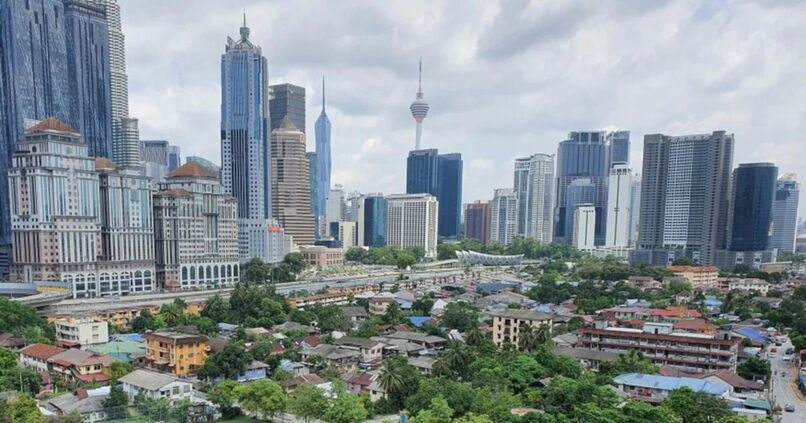
On the office side, occupancy for premium buildings has climbed to roughly 85%, up from around 80% a year earlier, while older, non-prime buildings continue to bleed tenants to newer towers. Kuala Lumpur illustrates this divide starkly: while headline city-core office vacancy sits close to 18–19%, best-in-class, wellness-certified towers in precincts like Tun Razak Exchange and KLCC remain above 85% occupied, even as fringe, aging blocks languish near 22% vacancy. This is not an aggregate supply problem — it is a quality and location problem at the asset level.
Certification standards are increasingly being applied across both new developments and retrofits of existing towers, reflecting how central green and wellness credentials have become to leasing decisions.
Retail tells a parallel story. Malaysia’s wholesale and retail trade sector has continued to grow, with monthly sales posting solid year-on-year increases, and Kuala Lumpur’s second-quarter 2026 performance showed office leasing and retail demand holding up well enough to offset softness elsewhere in the property market. Shopping centers integrated with residential, office, or transit components are capturing the strongest footfall gains, while standalone, dated retail formats are under pressure from both e-commerce and newer, better-located competitors.
Office Space in Malaysia in 2026: Trends, Opportunities, and Investment Insights
The defining trend in Malaysia’s office market is flight-to-quality. Tenants — particularly multinational occupiers, fintech firms, and professional services companies — are consolidating into fewer, better buildings rather than renewing leases across scattered, lower-grade space. This is visible in the rental spread: in Kuala Lumpur’s Golden Triangle, Grade A office rents currently range between roughly RM7.50 and RM9.50 per square foot monthly, while secondary or older office space typically commands only RM3.50 to RM5 per square foot, a gap that reflects how firmly the market now prices quality and certification. Naza Tower KL a Grade A office tower in Platinum Park, KLCC, is a good example of the certified stock commanding that premium.
Rental figures above are indicative market estimates as of publication and vary by building, floor, and lease terms. Always confirm current asking rents with a licensed real estate agent before making a leasing or investment decision.
Several factors are driving this bifurcation:
- ESG and wellness certification have become genuine leasing differentiators. Buildings with recognized green or wellness credentials are retaining tenants at occupancy rates well above the market average, because corporate tenants increasingly need certified space to meet their own sustainability reporting obligations.
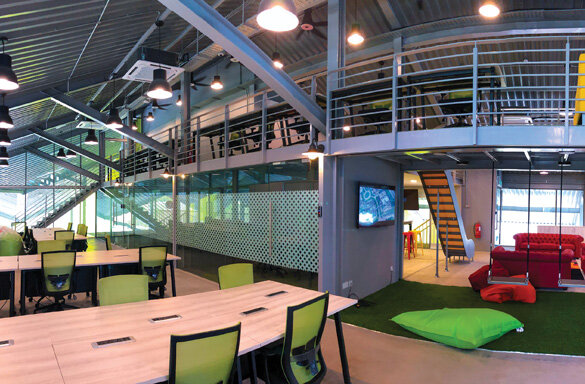
- Hybrid work has reduced blanket demand for floor space but increased demand for flexible, amenity-rich layouts — collaboration areas, breakout zones, and end-of-trip facilities are now standard requests rather than premium add-ons.
- Transit connectivity continues to reshape where tenants want to be. Suburban nodes served by MRT and LRT lines are absorbing overflow demand from the city core, a pattern expected to intensify as Kuala Lumpur’s MRT3 line advances through approvals.
- New supply pressure remains real. A pipeline of large, high-specification developments is scheduled for completion, which will likely sharpen competition further and put continued pressure on rents for buildings that cannot compete on certification, connectivity, or design.
For investors, the opportunity lies less in chasing yield on cheap, older stock and more in either acquiring already-certified Grade A assets with resilient tenant rosters, or in retrofitting fringe buildings to meet green benchmarks before the flight-to-quality gap widens further.
Retail Space in Malaysia in 2026: Trends, Opportunities, and Investment Insights
Retail real estate in Malaysia is being pulled in two directions simultaneously: renewed consumer and tourist spending on one side, and a fresh wave of new supply on the other. Kuala Lumpur alone is expected to add more than 1.2 million square feet of city-center retail space in 2026, alongside additional suburban neighborhood malls — a volume of new stock likely to push vacancy higher in the short term and force retailers to differentiate more aggressively to hold their ground.
At the same time, demand fundamentals are genuinely improving. Resilient employment, targeted government support measures, and the VMY2026 tourism push are all expected to lift retail footfall through the year, even against a backdrop of still-cautious household spending; the sector had contracted amid cost-of-living pressures in the prior year, making this rebound meaningful rather than incidental.
Malls integrated into mixed-use developments that combine retail with residential towers, offices, or transit hubs consistently outperform standalone shopping centers. This mirrors a broader shift in Malaysian retail toward destination experiences: F&B, entertainment, and lifestyle tenants are increasingly the anchor draw, while pure fashion and general merchandise retailers have ceded ground to e-commerce.
Investment opportunities in retail now cluster around three profiles: prime, tourism-facing malls in Kuala Lumpur and Penang benefiting directly from VMY2026 traffic; mixed-use neighborhood centers serving dense residential catchments; and repositioned or refurbished older malls that can capture spillover demand from oversupplied prime locations at a lower entry cost.
Investors weighing direct ownership against pooled exposure may also consider real estate investment trusts (REITs), which offer a lower-entry alternative to buying retail or office assets outright. Those who prefer direct ownership can see our step-by-step guide to buying property in Malaysia, which covers the purchase process for both residential and commercial assets
Factors Affecting Investment Decisions in Malaysia’s Commercial Real Estate Market
Several structural and cyclical factors are shaping how capital moves through the Malaysian commercial market this year:
- Interest rates and financing costs directly affect acquisition yields and refinancing decisions, making debt structuring a bigger driver of returns than in previous cycles.
- Supply pipelines in both office and retail segments mean investors must underwrite against near-term vacancy pressure, not just current occupancy.
- ESG compliance is increasingly tied to financing terms, as lenders and institutional investors attach sustainability conditions to capital.
- Foreign direct investment flows, particularly the roughly USD 94.8 billion committed to manufacturing and technology expansion, are indirectly lifting demand for supporting office, retail, and logistics space in Penang and Johor.
- Government initiatives, from VMY2026 to the Johor-Singapore Special Economic Zone’s preferential tax regime, are actively redirecting occupier and investor interest toward specific corridors.
- Consumer sentiment, still recovering from cost-of-living pressures, continues to shape retail leasing appetite and rental negotiating power.
The investment figures cited above, including foreign direct investment totals, are indicative estimates as of publication and may change as new data is reported. Confirm current figures with a licensed real estate agent or official government source before making investment decisions.
Investment Strategies for Commercial Real Estate in Malaysia 2026
Given this environment, several strategies stand out for investors positioning through the rest of 2026:
- Prioritize certified, transit-linked assets. Green and wellness-certified buildings near MRT or LRT stations are commanding both premium rents and stronger occupancy resilience, making them the safer core holding in a bifurcated market.
- Consider value-add retrofits. Older office and retail stock acquired at a discount can be repositioned through ESG upgrades, layout modernization, or tenant-mix refreshes to capture the flight-to-quality premium without paying prime acquisition prices.
- Diversify geographically toward growth corridors. Penang’s electronics and semiconductor investment boom and Johor’s Special Economic Zone status are creating office and retail demand independent of Kuala Lumpur’s cycle, offering diversification within the same national market.
- Favor mixed-use over single-use assets. Retail and office components embedded in larger mixed-use developments consistently outperform standalone assets on footfall, tenant retention, and rental growth.
- Underwrite conservatively against new supply. With significant office and retail space scheduled to complete this year, investors should stress-test occupancy and rental assumptions against a scenario of elevated near-term vacancy.
Browse current listings across these categories on Ziba Property Malaysia real estate platform to compare buildings by certification, location, and asking price.
Hot Spots and Emerging Areas for Commercial Real Estate Investment in 2026
Kuala Lumpur remains the dominant market by transaction value, commanding roughly 41% of the national total. Within the city, the Golden Triangle and precincts like Tun Razak Exchange and KLCC continue to anchor premium office demand, while mixed-use retail nodes are capturing the strongest tourism-driven footfall.
Penang has emerged as a genuine investment magnet, driven by its electronics and semiconductor manufacturing boom, which drew roughly USD 5 billion in fresh investment. Industrial land values have risen accordingly, and this manufacturing growth is spilling over into demand for supporting office and retail space around the island and Seberang Perai.
Johor Bahru is arguably the country’s fastest-growing market, with forecasts pointing to a compound annual growth rate above 10% through 2031. The Johor-Singapore Special Economic Zone’s preferential corporate tax regime, combined with the upcoming Rapid Transit System (RTS) rail link connecting Johor Bahru to Singapore, has already pulled billions in committed Singaporean corporate investment into the corridor, with land values near the Bukit Chagar terminus rising sharply as a result.
Land and price benchmarks referenced in this section are indicative estimates as of publication and can shift quickly in fast-moving corridors. Buyers and investors should verify current asking prices with a licensed real estate agent before committing capital.
Together, these three markets represent distinct investment theses: Kuala Lumpur for scale and liquidity, Penang for manufacturing-linked growth, and Johor for cross-border, policy-driven momentum. The Johor corridor in particular is worth watching closely, given how quickly incentive-driven demand can shift asset values along the RTS Link route.
Technology & Innovation Impact on Malaysia’s Commercial Real Estate in 2026
Technology is reshaping both how commercial buildings operate and how they are transacted. Operationally, smart building systems—covering energy management, access control, and predictive maintenance—are becoming standard specifications for Grade A office towers, both to meet ESG reporting requirements and to reduce operating costs that tenants increasingly scrutinize.
On the transactional side, digitalization is simplifying how commercial space is marketed and leased. Virtual tours, online listing platforms, and data-driven market analytics give both landlords and tenants far more transparency into pricing and availability than in previous cycles, compressing the information gap that once favored only the largest institutional players.
Retail is being reshaped from a different angle: e-commerce growth, with Malaysia’s online retail gross merchandise value climbing from roughly USD 20 billion toward a projected USD 29 billion by 2030, is not eliminating physical retail but redefining its purpose. Malls are increasingly designed around experiences that cannot be replicated online — dining, entertainment, and social space — while logistics and last-mile fulfillment demand is fuelling a parallel boom in industrial and dark-store real estate that increasingly sits adjacent to, or competes for capital with, traditional retail assets.
E-commerce market size figures above are indicative industry projections as of publication and are subject to change. Confirm current figures with an official industry source before relying on them for investment decisions.
How Can Investors Manage Risks in Malaysia’s Commercial Real Estate Market?
The clearest risk in today’s market is oversupply concentrated in specific segments and locations; both office and retail are seeing meaningful new completions this year, which can pressure rents and vacancy even as underlying demand improves. Investors can manage this by focusing acquisitions on buildings with genuine quality differentiation, certification, connectivity, and tenant mix rather than headline yield alone, since undifferentiated stock absorbs most of the downside in an oversupplied segment.
Interest rate exposure is a second key risk. Given financing costs directly compress net yields, investors should stress-test deals against higher-for-longer rate scenarios and favor conservative loan-to-value ratios where possible.
A third risk is tenant concentration and lease rollover timing, particularly in retail, where consumer sentiment remains sensitive to cost-of-living pressures. Diversifying tenant mix across F&B, essential retail, and experiential categories reduces exposure to any single category’s downturn.
Finally, regulatory and policy risk deserves attention: incentive regimes such as the Johor-Singapore Special Economic Zone’s tax benefits, and infrastructure timelines such as the RTS Link and MRT3, can materially shift asset values once implemented or delayed. Investors should treat policy milestones as active variables in their underwriting, not assumptions to be taken for granted.
What Should Investors Expect in Malaysia’s Commercial Real Estate in 2026?
Overall, 2026 is shaping up as a year of cautious optimism rather than a broad-based boom. Office and retail assets that meet modern quality, sustainability, and connectivity standards are likely to keep outperforming, while undifferentiated older stock faces continued pressure from both new supply and shifting tenant expectations.
Investors who focus on Grade A, transit-linked, and green-certified assets while diversifying across Kuala Lumpur, Penang, and Johor to capture different growth drivers are best positioned to navigate this bifurcated market. Those willing to take on value-add repositioning of older assets may find attractive entry points, provided they underwrite conservatively against near-term supply pressure and interest rate uncertainty. In a market rewarding quality over quantity, disciplined asset selection, not simply market timing, will separate strong returns from stalled ones this year.
Frequently Asked Questions
Is 2026 a good year to invest in Malaysian commercial real estate?
It is a selective year rather than a uniformly strong one. Grade A, transit-linked, and green-certified office and retail assets are performing well, while older, undifferentiated stock faces continued vacancy pressure, so returns depend heavily on asset quality and location.
What is the current rental range for Grade A office space in Kuala Lumpur?
Grade A office space in Kuala Lumpur’s Golden Triangle currently rents for roughly RM7.50 to RM9.50 per square foot per month, compared with RM3.50 to RM5.00 psf for secondary or older office space. Rates vary by building, floor, and lease terms, so confirm current asking rents with a licensed real estate agent.
Why are ESG-certified buildings performing better than older office stock?
Corporate tenants increasingly need certified space to meet their own sustainability reporting requirements, and lenders are attaching sustainability conditions to financing. This has made green and wellness certification a leasing prerequisite, not a bonus feature.
Which Malaysian cities offer the strongest commercial property growth potential in 2026?
Kuala Lumpur remains the largest and most liquid market, Penang is benefiting from a semiconductor and electronics manufacturing boom, and Johor Bahru is seeing the fastest growth, driven by the Johor-Singapore Special Economic Zone and upcoming rail connectivity.
What are the biggest risks facing commercial property investors in Malaysia right now?
The main risks are near-term oversupply in both office and retail segments, exposure to interest rate movements, tenant concentration in retail leases, and policy or infrastructure timelines that can shift asset values once implemented or delayed.
Disclaimer
This article is intended for general informational purposes only and does not constitute financial, legal, or investment advice. Rental rates, land values, and other price figures cited throughout are indicative market estimates as of the time of publication and are subject to change. Malaysia’s real estate transactions are regulated through a licensed real estate agent registered with the Board of Valuers, Appraisers, Estate Agents and Property Managers Malaysia (BOVAEP); readers should engage a licensed real estate agent to verify current pricing, availability, and terms before making any leasing, buying, or investment decision.
Looking for Office or Retail Space in Malaysia?
If you’re exploring office or retail opportunities in Kuala Lumpur, Penang, or Johor, browse current commercial listings on Ziba Property’s Malaysia platform to compare buildings by location, certification, and asking price, and connect directly with a licensed real estate agent to discuss your next move.

About the Author
Muhammad Amir is a Kuala Lumpur-based commercial real estate writer who covers office, retail, and industrial property trends across Malaysia, including Kuala Lumpur, Penang, and Johor. He works closely with licensed real estate agents and market analysts to turn quarterly market data into practical guidance for investors and business owners navigating Malaysia’s property market.

