

Dubai Hills Estate vs JVC: Which Investment Is Better?
Dubai Hills Estate and Jumeirah Village Circle sit at opposite ends of the Dubai investment spectrum. Dubai Hills Estate is a master-planned Emaar community built for capital appreciation and long-term family living. Jumeirah Village Circle (JVC) is a dense, apartment-heavy district built for rental yield and affordable entry. Neither community is objectively “better.” The right choice depends on whether an investor is optimizing for cash flow today or for equity growth over a five- to ten-year horizon. This comparison breaks down both communities across price, yield, appreciation, tenant demand, liquidity, and buyer fit, using 2026 transaction data.
Price disclaimer: All prices, price-per-square-foot figures, and rental yields cited in this article are approximate, based on publicly available 2026 transaction data, and are subject to change. They do not constitute a valuation or investment guarantee. Buyers should verify current figures through the Real Estate Regulatory Agency (RERA) and the Dubai Land Department, and confirm details for any specific unit with a licensed agent before transacting.
The Core Trade-Off, Stated Directly
Dubai Hills Estate delivers stronger capital appreciation and a more stable, family-oriented tenant base, but at a materially higher entry price and a lower percentage rental yield. JVC delivers higher gross rental yields and faster payback on smaller units, but with more competition from new supply and a more transient, budget-driven tenant pool. An investor chasing monthly rental income leans toward JVC. An investor seeking to build long-term equity through a lower-risk, higher-demand asset tends to favor Dubai Hills Estate. Most portfolios benefit from holding both, since they serve different functions.
Dubai Hills Estate: Community Profile
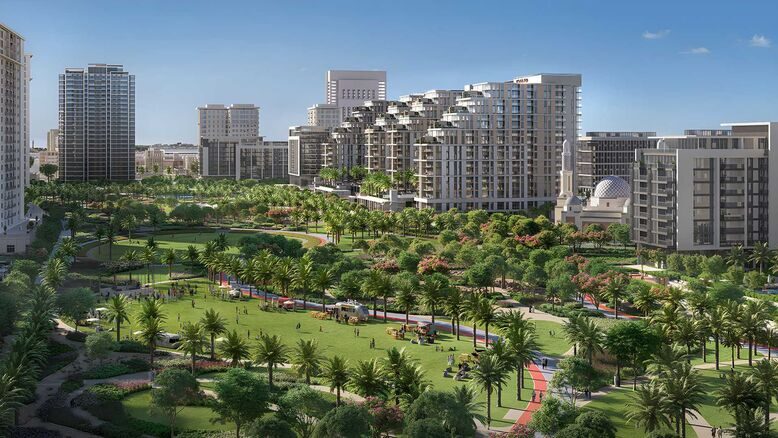
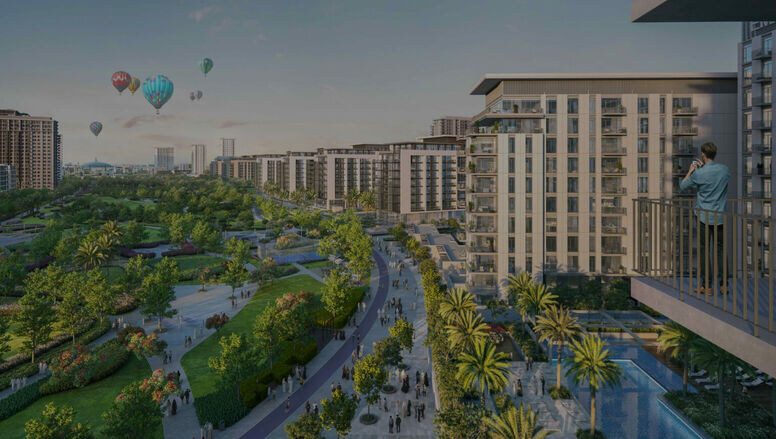
Dubai Hills Estate is a joint venture between Emaar Properties and Dubai Holding, spanning roughly 2,700 acres between Al Khail Road and Umm Suqeim Road. It is anchored by an 18-hole championship golf course, Dubai Hills Mall, Dubai Hills Business Park, and King’s College Hospital, and it mixes villas, townhouses, and mid-rise apartments within a single master plan.
The average price per square foot across apartments and villas in Dubai Hills Estate runs approximately AED 1,500–2,000, positioning it as a premium family-focused community with strong green spaces and an established retail and school ecosystem. A separate dataset citing Dubai Land Department transaction records puts the average price closer to AED 25,617 per square foot for a narrower apartment-transaction sample — the gap between the two figures reflects unit mix, since villa-heavy transactions pull the blended average down while premium apartment sales pull the isolated apartment averages up. Investors should treat per-sqft figures as directional rather than absolute and verify against the specific building or plot under consideration.
On the appreciation side, Dubai Hills Estate has been one of the market’s stronger performers. Dubai Hills Estate recorded price growth of 20.3% over the reference period, placing it among the fastest-appreciating communities in Dubai, behind only Dubai South. For villa buyers specifically, entry points and rental outcomes are well documented: a four-bedroom villa in Dubai Hills Estate priced around AED 5.5 million can generate more than AED 280,000 in annual rent, with the lifestyle premium recovered through superior appreciation rather than yield. Mid-market villas in the community, transacting on the secondary market, typically range from AED 2.5–5.0 million for three- to four-bedroom units.
On rental performance, Dubai Hills Estate is consistently described as a stability play rather than a yield-maximizing one. Dubai Hills Estate is stable, family-friendly, and liquid, but not yield-maximizing, making it a better fit for buyers who value tenant stability and resale depth over the highest percentage return. It also ranks among the best places to buy in Dubai for stable rental income rather than maximum yield, alongside JLT, JVC, Dubai Marina, and Business Bay — communities that are not always the highest-yielding but offer deeper tenant pools and stronger resale liquidity than fragile yield-only locations.
Jumeirah Village Circle: Community Profile
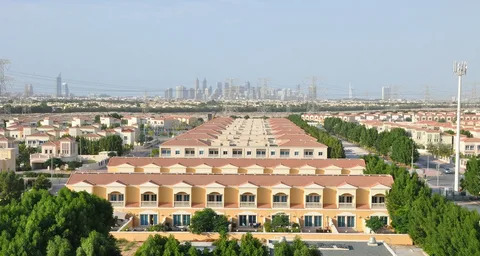
JVC is an 870-hectare master community developed by Nakheel, located centrally along Al Khail Road, roughly equidistant from Dubai Marina, Downtown Dubai, and Dubai Sports City. The community contains over 350 residential buildings and rows of townhouses. Construction began in 2005, and the community currently houses an estimated population of 25,000, which is expected to grow toward 300,000 once fully built out. Unlike Dubai Hills Estate, JVC’s stock is dominated by small- to mid-size apartments, with limited villa inventory concentrated in a handful of sub-districts.
Pricing is the community’s core investment appeal. Average pricing in JVC is around AED 15,992 per square foot in the comparative dataset. On a per-unit basis, one-bedroom apartments in JVC typically range from AED 550,000 to AED 900,000, well below the prices of equivalent units in Dubai Marina, Downtown Dubai, or Business Bay. More granular figures put one-bedroom units between AED 750,000–1,100,000, with rents of AED 65,000–90,000 annually, and service charges of AED 12–16 per square foot in predominantly chiller-free buildings.
Yield is where JVC consistently outperforms Dubai Hills Estate. JVC delivers gross rental yields of 7–9%, with net yields between 5.8% and 8%, supported by low vacancy rates and broad tenant appeal driven by its central location and expanding retail infrastructure. Transaction volume backs up the demand: JVC recorded over 13,600 apartment sales in 2025, more than any other district in Dubai. Unit-level yield data shows the same pattern seen across Dubai’s affordable-apartment segment: JVC studios yield approximately 7.9%, compared with 7.2% for three-bedroom units in the same community, since smaller units carry lower absolute prices while rental demand from Dubai’s largest tenant demographic — young professionals, singles, and couples — remains strong. A separate source confirms the range at the larger end of the unit spectrum, noting JVC offers average yields of 7.21% for three-bedroom flats, with yields across the community ranging from 6.78% to 7.87%.
Side-by-Side Comparison
Price disclaimer: Figures below are approximate 2026 market indicators, not fixed listing prices. Confirm current rates via RERA’s Dubai Land Department transaction records or through a licensed agent before making an offer.
For guidance on financing either purchase, see our Dubai mortgage and Golden Visa eligibility guide
| Factor | Dubai Hills Estate | Jumeirah Village Circle (JVC) |
| Developer | Emaar Properties / Dubai Holding | Nakheel |
| Property mix | Villas, townhouses, mid-rise apartments | Predominantly apartments, limited townhouses |
| Entry price (1-bed apartment) | Higher; premium apartment segment | AED 550,000–1,100,000 |
| Entry price (villa) | AED 2.5–5.0 million (secondary market, 3–4 bed) | Limited villa stock |
| Gross rental yield | Moderate; not yield-maximizing | 7–9% |
| Net rental yield | Lower, offset by appreciation | 5.8–8% |
| 2026 price growth | ~20.3% | Moderate, more supply-driven |
| Tenant profile | Families, long-term end-users | Young professionals, first-time renters |
| Liquidity | Strong for a villa community; deep resale pool | Very high; highest 2025 apartment sales volume citywide |
| Best investor fit | Capital appreciation, long-term hold, Golden Visa villas | Cash flow, buy-to-let, first-time investors |
Capital Appreciation vs Rental Yield
The fundamental tension between these two communities is the classic yield-versus-growth trade-off that applies across Dubai’s property market generally. Apartments deliver higher gross rental yields of 6–9%, but villas generate higher absolute rental income and have outperformed apartments in capital appreciation from 2022 through 2026, with prime villa communities seeing 35–55% price growth versus 20–35% for apartments. Dubai Hills Estate’s villa and townhouse segment sits squarely in that higher-appreciation category, while JVC’s apartment-dominated stock sits in the higher-yield, lower-growth category.
Operating costs reinforce the split. Service charges for apartments average AED 15–25 per square foot, while villas average AED 3–8 per square foot, though villa owners absorb private maintenance costs for pools, gardens, and exteriors that apartment owners do not carry. JVC’s chiller-free building stock keeps service charges toward the lower end of the apartment range, helping preserve net yield relative to communities with centralized district cooling.
Liquidity also diverges by property type rather than by community alone. Apartments offer superior liquidity, with resale typically taking 30–60 days, compared with 90–180 days for villas. This favors JVC for investors who prioritize exit flexibility, while Dubai Hills Estate villa owners should plan for a longer hold horizon and a more patient resale process.
Risk Profile and Market Positioning
JVC’s primary risk is oversupply. As one of the highest-transaction-volume districts in Dubai, the area sees new completions arriving continuously, which can pressure both rents and resale prices in buildings that lack differentiation. Investors buying in JVC should prioritize location within the community — proximity to Circle Mall, established schools, and access to the main road — rather than treating all JVC addresses as interchangeable.
Dubai Hills Estate’s primary risks are the entry cost and a longer payback period on rental income alone. Because returns are weighted toward appreciation, an investor who needs near-term cash flow or who might need to exit within two to three years carries more downside risk than in a high-liquidity apartment market. The community’s advantage is structural: proximity to Downtown Dubai and Dubai Marina via Al Khail Road, an integrated retail and healthcare ecosystem, and end-user demand from families who are less price-sensitive than the renter pool driving JVC.
Which Community Fits Which Investor
A first-time investor with AED 700,000–1,000,000 seeking monthly rental income and a fast, liquid exit is generally better served by a JVC studio or one-bedroom apartment. An investor with AED 2.5 million or more, targeting a 7–10 year hold, Golden Visa eligibility, and end-user-grade demand, is generally better served by a Dubai Hills Estate villa or townhouse. Investors building a mixed portfolio often use JVC to generate current income that partially funds a longer-term acquisition in Dubai Hills Estate, treating the two communities as complementary rather than competing choices.
Bottom Line
Dubai Hills Estate and JVC represent two distinct investment theses inside the same city. Dubai Hills Estate rewards patience with appreciation and tenant stability; JVC rewards a lower entry price with immediate, higher-percentage cash flow. The stronger decision criterion is not “which area is better” but “which return profile matches the investor’s holding period, liquidity needs, and available capital.” Reviewing actual Dubai Land Department transaction comparables for the specific building or plot under consideration remains essential before committing capital to either community.
Frequently Asked Questions
Is Dubai Hills Estate or JVC better for rental income?
JVC is generally better for rental income. It offers gross rental yields of roughly 7–9% on studios and one-bedroom apartments, compared with Dubai Hills Estate, which is positioned more for capital appreciation and tenant stability than maximum yield.
Which community appreciates faster, Dubai Hills Estate or JVC?
Dubai Hills Estate has shown stronger price growth, with 2026 data indicating an appreciation of approximately 20.3%, driven by its villa and townhouse segments. JVC’s apartment-heavy supply keeps its price growth more moderate.
What is the minimum investment required to join JVC?
Studio and one-bedroom apartments in JVC typically start around AED 550,000–750,000, making it one of the more accessible entry points among established central Dubai communities.
What is the minimum budget to invest in Dubai Hills Estate?
Villas and townhouses on the secondary market typically start around AED 2.5 million for a three-bedroom unit, with premium apartments and larger villas priced well above that.
Does Dubai Hills Estate or JVC qualify for the UAE Golden Visa?
Both communities can qualify, since eligibility is based on property value (currently AED 2 million or more) rather than location. A Dubai Hills Estate villa is more likely to meet this threshold on its own, while a JVC-based application may require combining multiple units or pairing with additional assets.
Is it better to buy an apartment or a villa for investment in Dubai?
Apartments generally deliver higher percentage rental yields and better liquidity, while villas tend to deliver stronger long-term capital appreciation and higher absolute rental income. The right choice depends on whether the investor prioritizes cash flow or long-term equity growth.
Ready to Compare Dubai Hills Estate and JVC Listings?
Explore current listings in Dubai Hills Estate and Jumeirah Village Circle, request area-specific yield data, or speak with a Ziba Property advisor to map out which community best fits your budget and investment timeline. Browse Dubai investment listings with Ziba Property.

About the Author
Muhammad Amir is a Dubai-based real estate consultant at Ziba Property, specializing in off-plan and secondary-market investment across Dubai Hills Estate, JVC, and the broader Al Khail Road corridor. He works with first-time and portfolio investors to align property purchases with rental yield targets, Golden Visa eligibility, and long-term capital growth strategies in the UAE market.

