Dubai Freehold Zones for International Buyers: Complete 2026 Guide
There is a particular kind of confidence that comes with owning something outright. Not leasing it. Not holding it through a local partner who appears on the title deed while you manage the asset from abroad. Owning it — your name, your deed, your land. That kind of ownership, applied to real estate, is what Dubai has been offering foreign nationals for over two decades. And in 2026, the framework that makes it possible is more mature, more transparent, and more attractive than at any point in the market’s history.
Dubai’s freehold property system was not inevitable. Before 2002, foreigners could not purchase real estate in the emirate at all. The market was closed. Then Law No. 7 arrived, quietly reshaping what was possible, and the city has been drawing international capital ever since. Today, over 60 designated zones across Dubai are open to buyers of any nationality, with no residency requirement, no local sponsor, and no expiry date on ownership. It is one of the most permissive foreign ownership frameworks of any major city in the world.
This guide exists because the market is also increasingly sophisticated, and sophisticated markets reward preparation. Understanding which zones are performing best, what the buying process actually looks like, how the Golden Visa intersects with property ownership, and what the 2026 market data says about yields and growth all of that is the difference between a well-made decision and an expensive one.
What Freehold Actually Means Here
The term gets used loosely in international real estate conversations, so it is worth anchoring it precisely in the Dubai context. A freehold title in a designated Dubai zone grants the holder permanent, unconditional ownership of both the structure and the land beneath it. There is no reversion clause. There is no time limit. There is no requirement to renew.
Under the governing legislation Law No. 7 of 2006 and its subsequent amendments a foreign freehold owner in Dubai has exactly the same property rights as a UAE national within those zones. The right to sell at any time. The right to lease on short or long-term arrangements. The right to mortgage the property through a UAE or international lender. The right to give it. The right to pass it to heirs. All of these are registered and enforceable through the Dubai Land Department, whose blockchain-integrated title deed system has made ownership verification faster and more reliable than ever.
This matters because Dubai also offers leasehold and usufruct arrangements in some areas, and the distinction is significant. Leasehold gives you the right to occupy and use a property for a fixed term typically up to 99 years after which land rights revert to the original owner. Usufruct is similar: long-term usage rights without land ownership. Both are legitimate structures in the right context, but neither offers the same resale liquidity, inheritance clarity, or financial leverage as freehold. When international buyers ask whether they can truly own property in Dubai, freehold in a designated zone is the only answer that is unequivocally yes.
Who Qualifies to Buy — Foreign Nationals and International Buyer
One of the most common misconceptions about Dubai property is that eligibility is somehow restricted — that certain nationalities face barriers, or that a UAE visa is a prerequisite. Neither is true. Within the designated freehold zones, there are no nationality restrictions whatsoever. Citizens of India, the United Kingdom, Pakistan, Russia, China, the United States, Germany, France, Nigeria, Brazil every country qualify on identical terms.
You do not need a UAE residency visa to buy. You do not need to be physically present in the country during the transaction, provided a Power of Attorney is in place for the registration step. There is no minimum age for ownership; parents routinely register properties in the names of minor children. Corporate entities, including offshore holding companies and foreign-incorporated businesses, can hold freehold titles. The framework is, by design, maximally inclusive.
That said, 2026 has introduced one meaningful layer of complexity for buyers seeking local mortgage finance. Following updated Know Your Customer (KYC) guidelines introduced by the UAE Ministry of Finance in 2025, non-resident buyers applying for UAE bank mortgages now face a standard requirement for six months of bank statements, regardless of their existing banking relationships. This is part of the country’s ongoing effort to maintain its status on international financial compliance lists. For cash buyers, the documentation burden is lighter — passport verification and standard anti-money-laundering checks at the DLD remain the primary requirements.
The Zones That Matter in 2026
Over 60 areas carry freehold designation in Dubai today, a list that has expanded steadily since the original decree and received further additions as recently as 2024, when Nad Al Sheba and Al Jaddaf received expanded freehold status. Rather than cataloguing every zone, what is useful is understanding the different tiers of the market and what each one is actually optimised for.
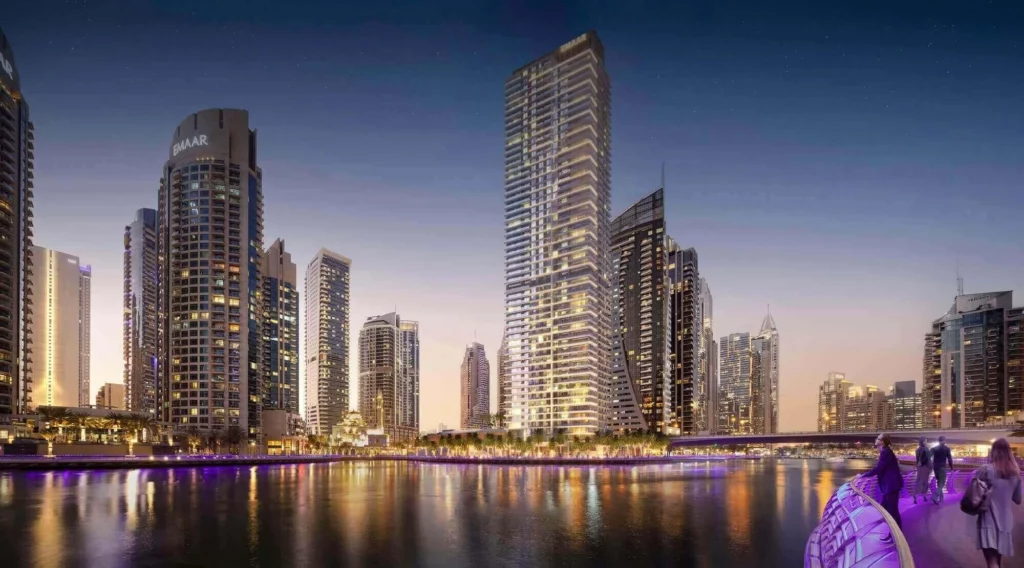
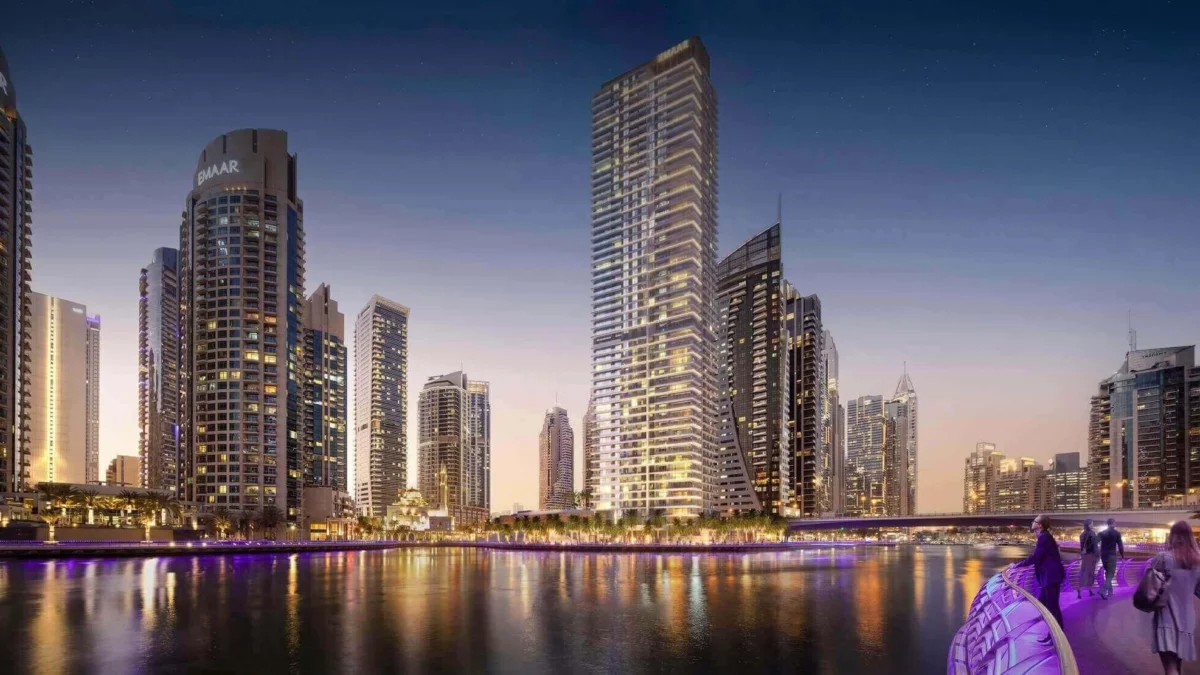
At the premium end, the names are familiar: Downtown Dubai, Palm Jumeirah, Dubai Marina, Jumeirah Beach Residence. These are the areas where international demand has been most consistent, where resale liquidity is strongest, and where the combination of capital preservation and lifestyle appeal attracts buyers who are not purely yield-driven. Gross rental yields in these zones run between 5.5% and 6.5% in 2026 below the city average, but paired with historical capital appreciation that has averaged 8–15% annually since 2021 in the best-located units. Palm Jumeirah and Downtown are also the natural home for buyers seeking Golden Visa eligibility, since properties in both areas regularly exceed the AED 2 million threshold.
The mid-market tier Business Bay, Jumeirah Lake Towers, Dubai Creek Harbour, Al Jaddaf, Motor City offer a more balanced proposition. Yields here typically sit between 6% and 7%, capital growth has been steady without the volatility of the premium segment, and entry prices are more accessible, with quality one-bedroom apartments available from around AED 900,000. Dubai Creek Harbour deserves particular attention in 2026: a master-planned waterfront district still in active development, with infrastructure investment driving property values upward and a growing tenant pool from the adjacent healthcare and financial services clusters.
For buyers whose primary objective is yield, the value-zone communities remain compelling. Jumeirah Village Circle (JVC), Dubai South, Arjan, International City, and Discovery Gardens consistently post gross yields between 7.8% and 9.8% based on Ejari-verified rental data — among the highest in any major global city for a market with no rental income tax. Entry points here start below AED 400,000 for a studio, making this the tier most accessible to first-time international investors or buyers building a multi-unit portfolio. The trade-off is a less liquid resale market and more modest capital appreciation compared to prime zones, but for a pure income strategy the numbers are hard to ignore.
Dubai’s rental yields are not a promotional talking point. They are Ejari-verified, tax-free, and in 2026 they are outpacing comparable gross returns in London, Singapore, and New York by a margin that makes the comparison almost uncomfortable.
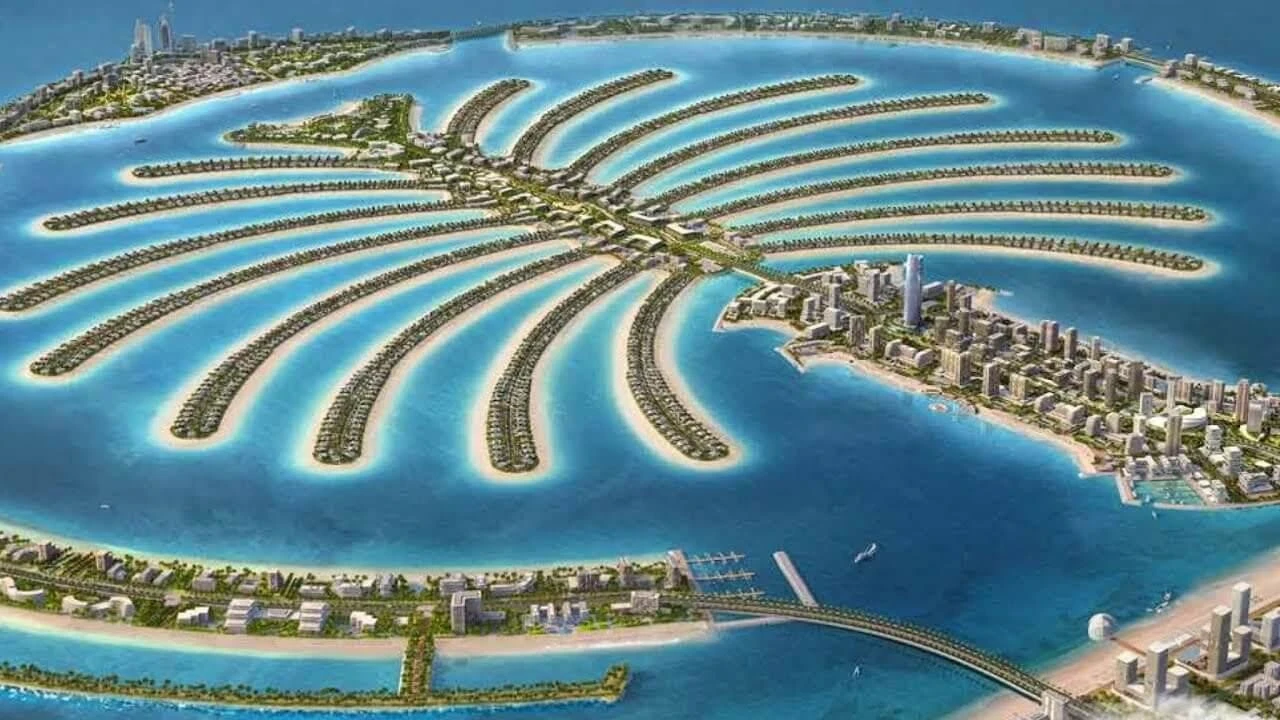
Two newer zones are worth tracking for longer-horizon investors. Dubai Islands — formerly Deira Islands, now being developed under the Nakheel master plan — is adding 80 kilometres of new waterfront to Dubai’s coastline, with Phase 1 handovers beginning in 2026 and early off-plan buyers already recording 15–25% paper appreciation since initial launch. Meydan, expanding from the racecourse area into a full residential and commercial district, sits at AED 1,100–1,800 per square foot with gross yields averaging 5.5–7%, supported by proximity to Mohammed Bin Rashid City and the Meydan One Mall under construction nearby.
The Golden Visa: When Property Becomes Residency
No discussion of Dubai freehold ownership in 2026 is complete without addressing the Golden Visa, because for a significant proportion of international buyers the residency dimension is as important as the financial return. The programme, which ties 10-year renewable UAE residency to property investment, has quietly become one of the most powerful incentives in the global investor visa landscape.
The mechanics are straightforward. Purchase a property or a portfolio of properties with a combined registered value of AED 2 million or more within a designated freehold zone, and you become eligible to apply for the 10-year Golden Visa. The visa covers the investor, their spouse, and dependent children. It is not tied to employment, so it does not lapse if you leave a job or change careers. It can be maintained even if you spend the majority of the year outside the UAE, a meaningful flexibility for buyers who want UAE residency as an option rather than a primary base.
A noteworthy update for 2026: the previous restriction requiring a minimum down payment on mortgaged properties for Golden Visa eligibility has been revised. Buyers can now leverage higher loan-to-value ratios on qualifying high-value freehold assets while still meeting the AED 2 million threshold, provided the registered property value meets the minimum. This has made the Golden Visa pathway accessible to buyers who previously fell just short of eligibility due to financing structures.
For buyers not yet at the AED 2 million level, the 3-year property investor visa remains available at the AED 750,000 threshold. It is a shorter commitment and carries fewer family extension rights than the Golden Visa, but for buyers building toward the higher tier over time it represents a functional entry point to UAE residency while the investment portfolio grows.
How the Transaction Actually Works
The property listing in UAE purchase process has earned a reputation for being faster and less adversarial than comparable transactions in the UK, the US, or most of continental Europe. For a ready (secondary market) property, the journey from an accepted offer to a registered title deed typically takes two to four weeks. Here is what that looks like in practice.
It begins with due diligence. Before anything is signed, a competent RERA-licensed agent will verify the title deed on the DLD’s REST portal, confirm no outstanding mortgages or encumbrances exist on the unit, and establish that the seller has the legal authority to transact. This step is non-negotiable, and the DLD’s public verification tools make it straightforward. If the property is within a master-planned community — a Nakheel or Emaar development, for instance — the developer will need to issue a No Objection Certificate (NOC) confirming no outstanding service charges, a process that typically takes three to five business days and costs between AED 500 and AED 5,000 depending on the developer.
Once due diligence is complete, buyer and seller sign a Memorandum of Understanding — Form F in the RERA framework — which sets out the purchase price, payment schedule, inclusions, and the terms of the 10% security deposit paid by the buyer. This deposit is refundable in full if the seller defaults; it is forfeited by the buyer if they walk away without cause. The MOU is a binding document, and international buyers should read it carefully before signing rather than treating it as a preliminary formality.
Mortgage buyers finalise their loan approval at this stage. Non-resident borrowers in 2026 face a maximum loan-to-value ratio of 50% for properties above AED 5 million, and 80% for properties below that threshold — the same structure that has applied to non-resident buyers for several years, though individual bank policies vary. Arranging pre-approval before making an offer is strongly advisable; it sharpens your negotiating position and removes a critical variable from the timeline.
The transaction completes at a DLD Trustee Office, where both parties (or their Power of Attorney representatives) appear, the 4% DLD transfer fee is paid, and the title deed is issued on the same day. The fee is typically the buyer’s responsibility, though this is a point of negotiation in some transactions. Total acquisition costs, including the transfer fee, agency commission (2% plus 5% VAT on the commission), Trustee Office fee, NOC, and mortgage registration if applicable, generally run between 7.5% and 8% of the purchase price. On a AED 1.5 million apartment, that is approximately AED 112,000 to AED 120,000 in transaction costs on top of the purchase price — a number worth modelling before you begin
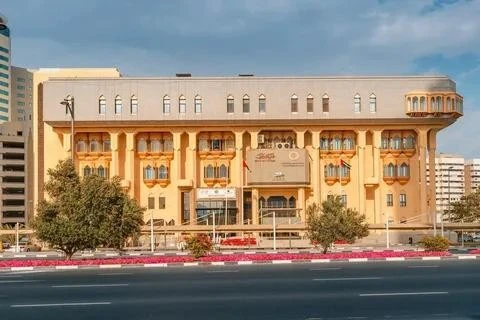
Where the Market Stands Right Now
It is worth being honest about 2026 rather than simply optimistic. The exceptional price growth of 2022 and 2023 — when some Dubai segments posted annual appreciation north of 20% — has moderated. That is not a negative development; it is the natural behaviour of a market maturing into a more sustainable growth cycle. Residential prices across most freehold segments are tracking 5–8% annual appreciation in 2026, with villas continuing to outperform apartments. Villa prices in master-planned communities rose 14.7% in the twelve months to March 2026, reflecting genuine supply constraints in the segments most popular with owner-occupiers and long-term tenants.
Rental yields in UAE business & services property sector have remained more resilient than many analysts predicted, largely due to steady population growth. Dubai’s resident population continues to expand through increased business formation, regional migration, and the Golden Visa program attracting high-net-worth individuals from Russia, India, China, and Europe. More residents naturally create higher rental demand. The citywide gross average yield of 6.5–7.5% compares favorably with major international markets, especially when considering the absence of rental income tax, capital gains tax, and annual property tax in Dubai.
The secondary market resale properties rather than off-plan is showing healthy transaction volumes, with secondary deals accounting for 41.1% of all residential transactions in the first half of 2025. Strong secondary market activity is one of the clearest indicators of a market with genuine liquidity, meaning buyers are not locked into assets they cannot exit. That is a meaningful reassurance for international investors who worry about getting stuck.
Off-plan remains a different conversation. Developer payment plans — often structured as 10% on booking, with the remainder spread across construction milestones and post-handover — offer leverage that simply is not available in the secondary market. Early buyers in Dubai Islands and Meydan have already seen paper appreciation of 15–25% from off-plan launch prices. But off-plan carries its own risks, including developer delivery timelines, and international buyers considering off-plan should do thorough due diligence on the developer’s track record before committing.
Figures quoted are approximate market estimates based on current data and are subject to change. Always verify current pricing and yields directly with a RERA-licensed agent before making any investment decision.
One Thing Many Guides Leave Out: Inheritance
The vast majority of articles about Dubai freehold ownership skip over inheritance, and that is a disservice to international buyers. The UAE applies Sharia inheritance principles by default to property owned by non-Muslims unless a formal will is in place. This can produce outcomes that differ significantly from what the owner intended particularly for unmarried couples, blended families, or buyers whose home country inheritance law follows a different structure entirely.
The practical solution is simple and relatively inexpensive: register a will through the DIFC Wills Service Centre, which allows non-Muslim expatriates and foreign property owners to record their inheritance wishes under common law principles. Once registered, your Dubai property will pass according to your stated wishes rather than Sharia default rules. Any international buyer purchasing freehold property in Dubai should treat DIFC registration not as an optional extra but as a standard part of the transaction process.
A Practical Note on Professional Advice
Nothing in this guide should substitute for qualified, personalised counsel. Dubai’s real estate framework is clear and well-documented, but the specifics of any individual transaction — financing structure, tax implications in the buyer’s home jurisdiction, inheritance arrangements, corporate holding structures — require professional input. Work with a RERA-licensed agent who can verify listings against the DLD registry, a UAE property lawyer for the contractual documents, and, if relevant, a financial adviser who understands cross-border property tax obligations in your country of residence.
The market rewards preparation. International buyers who arrive having done the groundwork — who understand what they are buying, where the costs sit, and what the process looks like — consistently make better decisions than those who rely on promotional material alone.
Frequently Asked Questions
Can any nationality buy freehold property in Dubai?
Yes, without exception. There are no nationality restrictions within Dubai’s designated freehold zones. Citizens of every country including those with no formal diplomatic relationship with the UAE can purchase and hold freehold property in their own name, registered directly with the Dubai Land Department.
Do I need to live in the UAE or hold a visa before I buy?
No. UAE residency is not a precondition for freehold property purchase. Many international buyers complete transactions entirely remotely, using a Power of Attorney for the DLD registration step. Purchasing freehold property in a designated zone can itself lead to UAE residency through the Golden Visa, rather than being a consequence of it.
What is the Golden Visa property investment threshold in 2026?
The 10-year renewable Golden Visa requires a minimum property investment of AED 2 million, which can be a single property or a portfolio of freehold properties registered in the investor’s name. A 3-year property investor visa is available at the AED 750,000 threshold. Both visa categories cover the investor’s spouse and dependent children.
What are the full costs of buying a freehold property in Dubai?
Buyers should budget 7.5–8% of the purchase price on top of the property cost. The primary components are: the DLD transfer fee (4%), agency commission (2% plus 5% VAT on the commission), the DLD Trustee Office fee (AED 4,000 for properties above AED 500,000), the developer NOC fee (AED 500–5,000), and, if using a mortgage, the registration fee (0.25% of the loan amount plus AED 290). There is no annual property tax, no rental income tax, and no capital gains tax in Dubai.
What is the difference between freehold and leasehold ownership in Dubai?
Freehold grants perpetual ownership of the property and the land it stands on, with full rights to sell, lease, mortgage, inherit, and transfer — indefinitely and without restriction. Leasehold grants the right to use a property for a fixed term, typically up to 99 years, after which land rights revert. Within Dubai’s designated freehold zones, foreign buyers access full freehold titles. Outside those zones, foreigners are generally limited to leasehold or usufruct arrangements.
Which freehold zones offer the best rental yield in 2026?
The strongest gross yields in 2026 come from value-tier communities: Dubai South (around 8.1%), Jumeirah Village Circle (around 7.8%), Arjan, International City, and Discovery Gardens (8.4–9.8% based on Ejari-verified data). Premium zones like Downtown Dubai and Palm Jumeirah yield less — roughly 5.5–5.8% — but have historically delivered stronger capital appreciation and carry deeper resale liquidity.
Should I register a will if I buy property in Dubai?
Yes. Without a registered will, UAE Sharia inheritance principles apply by default to property owned by non-Muslims, which may not align with your wishes. The DIFC Wills Service Centre allows non-Muslim expatriates and foreign property owners to register a will under common law principles, ensuring the asset passes according to your instructions. This is a straightforward process and a standard part of good property purchase planning for international buyers.
Ready to invest internationally? Discover vetted property opportunities and Golden Visa pathways at ziba-property.com

ABOUT THE AUTHOR
Muhammad Amir is a property consultant at Ziba Property, working with international buyers navigating real estate markets across the Gulf and Southeast Asia. He specialises in helping foreign nationals understand ownership laws, identify suitable listings, and structure purchases around their financial and residency goals.